
Dade County Criminal Court Cases
Dade County criminal court cases are divided by jurisdiction. Superior Court, part of the Lookout Mountain Judicial Circuit, tries felonies and keeps accusations, indictments, pleas, trials, sentences, and appeals. Its Clerk maintains the permanent criminal docket at 255 West Crabtree Street, Suite 103, in Trenton. Magistrate Court handles arrest and search warrants, first appearances, preliminary hearings, most initial bonds, county ordinance matters, and bad-check citations. It is a court of inquiry, not the felony trial court.
Trenton Municipal Court keeps city ordinance and traffic matters. Dade Probate Court may hear traffic matters within its assigned jurisdiction. The same name can thus appear in an early Magistrate record, a later Superior Court file, or a separate city citation. Ask each clerk for its own case number. A booking number or police incident number may help trace the event, but neither replaces the court's identifier.
Dade County Magistrate Case Records
A recent arrest may produce a Magistrate Court event before any Dade County Superior Court case exists. Magistrates decide probable-cause issues, conduct first appearances and preliminary hearings, and set most early bonds. The official Dade Magistrate Court page gives the local counter and contact route.
The county's Cases and Matters page shows why an early search belongs there. If Superior Court reports no file, call Magistrate Court at 706-657-4113 with the full name, approximate event date, and any warrant or booking reference. Then check again with the Superior Court Clerk after the prosecutor files an accusation or a grand jury returns an indictment. This sequence avoids treating a not-yet-filed felony case as if no court process occurred.
The linked county view illustrates the limited court's role. It connects warrants and first-stage proceedings to the later felony docket rather than merging them into one file.
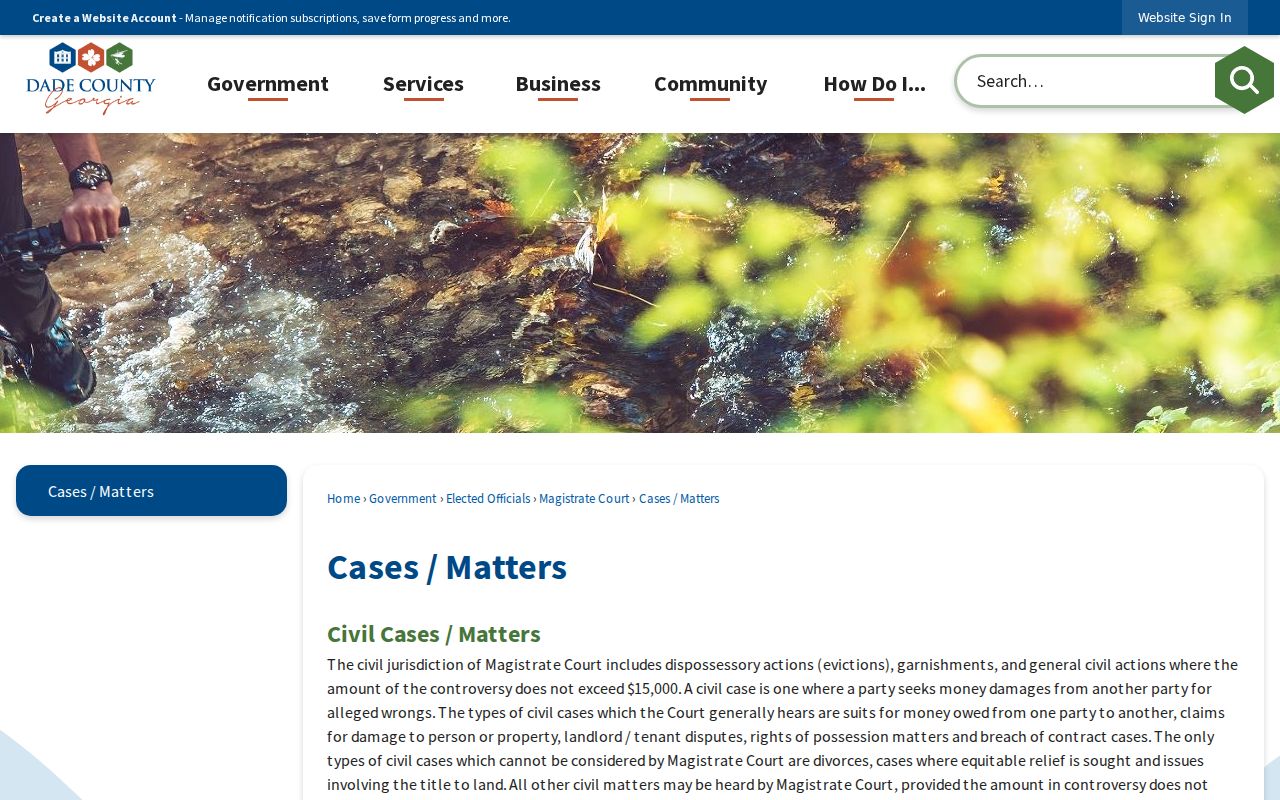
The image is a useful reminder to match the record request to the stage of the Dade County criminal case.
Searching Dade County Case Records
No complete, free Georgia database replaces the Dade County Clerk. Start with the Clerk's criminal desk for prosecuted felony matters. PeachCourt and re:SearchGA are state-authorized access partners for participating courts, but logins, document fees, participation, and historical coverage can limit what appears. Confirm any remote result against the clerk's official docket.
- Call or visit the Superior Court Clerk and state that the request concerns a criminal file.
- Give the full name, approximate filing or arrest year, and case number when known.
- Ask whether the index and responsive file are electronic, paper, or microfilm.
- Request the docket or register of actions first, then identify the documents needed.
- Choose plain or certified copies and confirm the total cost and delivery method.
| Field Label | Type | Required | Notes |
|---|---|---|---|
| Party name | Text | Search dependent | Use full legal name and verify same-name matches. |
| Case number | Text | No | Most precise route when the Dade court number is known. |
| Filing year | Date or filter | No | Helps narrow common names and older dockets. |
| Court or case type | Select | Portal dependent | Choose criminal and the correct Dade County court. |
| Document access | Account or clerk request | Varies | Images and certified copies may carry separate charges. |
Dade County Case Portal Limits
re:SearchGA can expose participating Georgia court records, while PeachCourt supports e-filing and document access. Neither should be read as a promise that every Dade County criminal court case, image, or old docket is online. A search gate, account requirement, document charge, or missing historical file can stand between the index and the actual pleading.
The re:SearchGA portal shown by its official source is one remote route, not the court of record.
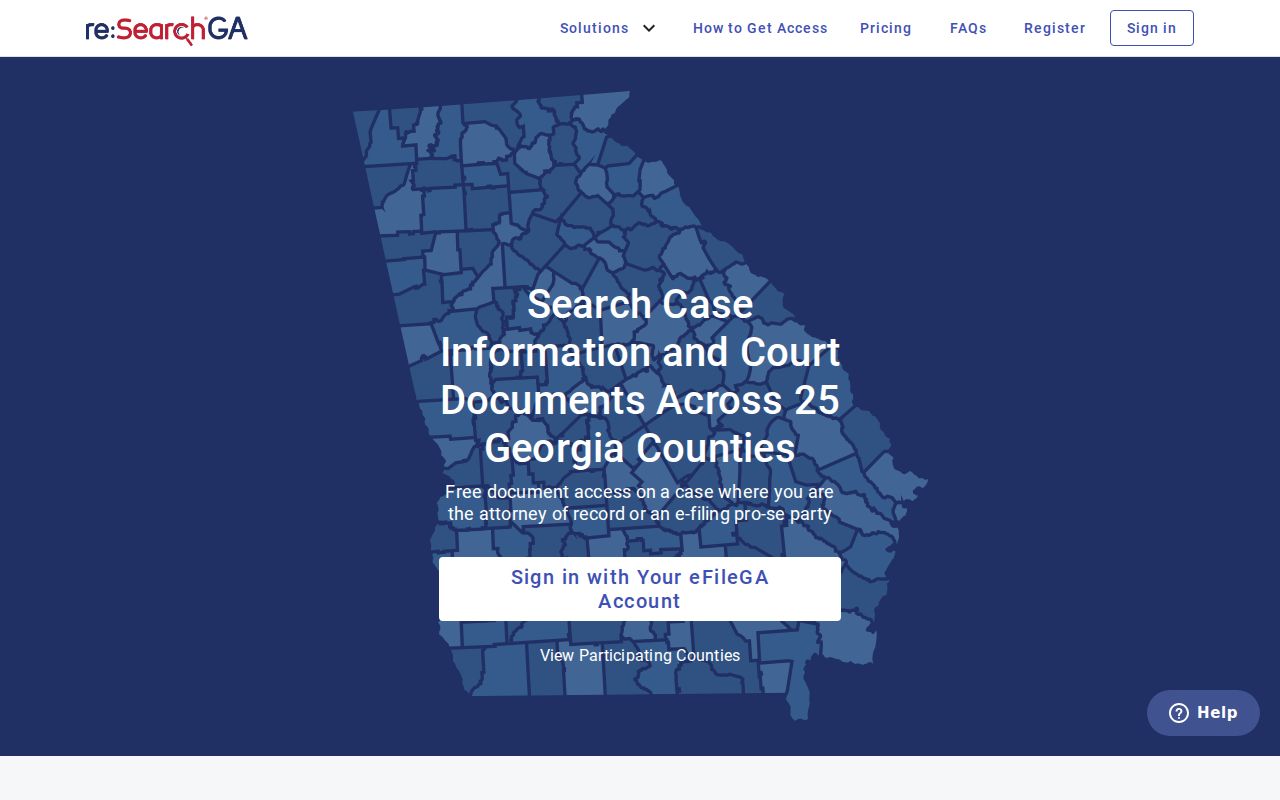
If a remote search fails, call the clerk instead of concluding that the case does not exist. Ask about spelling variants, the filing year, a prior case number, and paper or microfilm holdings.
PeachCourt supplies another authorized channel for participating clerks.

Use its result to locate a Dade filing, then obtain an authoritative docket or certified disposition from the Superior Court Clerk when proof matters.
Inside a Dade County Case File
A Dade County criminal case file follows charges as prosecuted, not merely the allegations entered at jail intake. Read each count separately. One count may end in a plea while another is dismissed, and the sentence may contain probation, fines, restitution, or other conditions. The docket gives the event sequence; the signed judgment or disposition supplies the more reliable outcome.
| Case Number & Court | Unique court identifier, filing court, case type, status, filing date, and assigned judge. |
|---|---|
| Charging Document | Accusation or indictment listing the alleged offenses and statutes count by count. |
| Docket Entries | Filed motions, orders, notices, counsel, bond orders, and calendar events. |
| Hearing Dates | Arraignment, motions, plea, trial, and sentencing dates when entered. |
| Disposition & Judgment | Plea, verdict, dismissal, nolle prosequi, acquittal, or other result for each count. |
| Sentence & Conditions | Custody, probation, fines, costs, restitution, and appeal entries when applicable. |
Dade County Paper Case Files
The Dade County Clerk says criminal and civil dockets are permanent records and notes the transfer of paper material to microfilm. Older Dade County criminal court cases may therefore require staff retrieval rather than a portal click. Ask for the docket first. It can identify which order, accusation, judgment, or sentencing sheet is worth copying and keeps a broad request from generating needless pages.
The Clerk's criminal history request policy describes onsite self-searches, specific dispositions, prepayment, and copy rules.
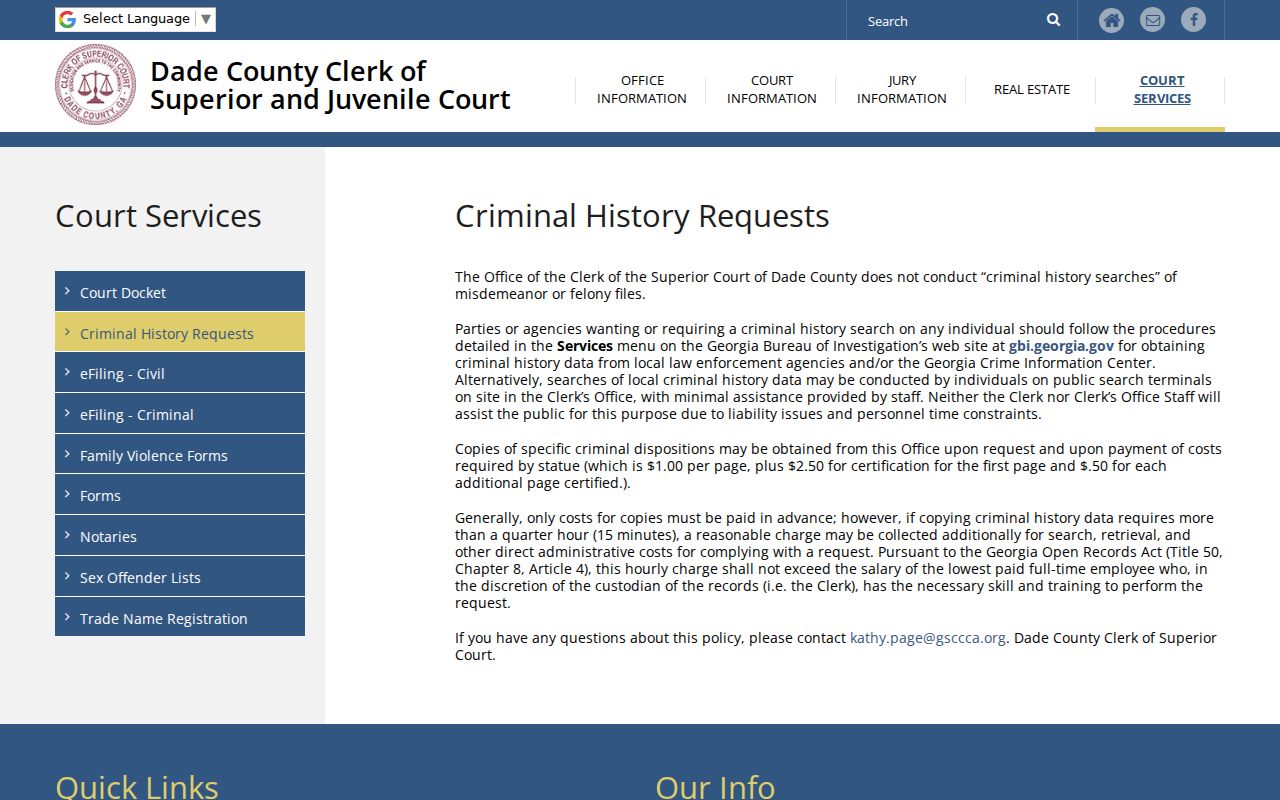
Uncertified self-service copies cost $0.50 per page; staff-assisted copies cost $1 per page. Certified or exemplified copies are $2.50 for the first page and $0.50 for each added page. Computer printouts cost $2.50 per page or equivalent. Fax or electronic delivery is $2.50 for the first page and $1 for each added page. After the first 15 minutes, lawful staff time may also apply, so request an estimate.
How a Dade Criminal Case Moves
Police investigate and send evidence to the prosecutor. The Lookout Mountain Judicial Circuit District Attorney independently decides which charges to pursue and prosecutes both felony and misdemeanor matters in Dade County. A prosecution may begin through a grand-jury indictment or a prosecutor-filed accusation. Arraignment gives public notice of the filed charges and takes a plea. Motions, negotiation, or trial follow before the court enters an outcome and, if required, a sentence.
Case flow: Charges Filed › Arraignment › Pretrial › Plea or Trial › Disposition › Sentencing
Each stage can add docket entries without resolving the case. A calendar date is not a conviction, and a charge listed at arrest may change before filing. For the broader distinction between intake allegations and court outcomes, see the county arrest lookup.
Read Dade County Case Dispositions
Disposition means the result recorded for a charge. It is not always a conviction. An acquittal is a not-guilty result after trial. A dismissal ends a charge without conviction. Nolle prosequi means the prosecutor formally chose not to continue that charge at that time. A no bill means the grand jury declined to indict. Dead docket means prosecution was postponed indefinitely, not that a court found the person innocent.
A guilty plea or verdict may lead to custody, probation, fines, restitution, or several terms at once. First Offender treatment can permit discharge without an adjudication of guilt after successful completion, but the precise order controls. Read the signed order for every count and compare it with the docket. Do not infer the whole case result from one line or from a booking charge.
When GCIC lacks a final result, obtain a certified disposition from the Dade County Clerk and ask the reporting court or prosecutor to transmit the correction. The court document proves what happened in the local case; the Georgia Crime Information Center maintains the separate statewide history.
Correct Records With Dade Dispositions
A statewide GCIC history can lack the final result even when the Dade County criminal case closed. Fingerprint data creates an arrest cycle, while the court or prosecutor later reports the disposition. Delays, old paper files, spelling differences, and charge changes can break that link. The best repair document is usually a certified disposition from the Dade Superior Court Clerk, not a screenshot from a remote portal.
First, obtain the case number and ask the Clerk for the signed outcome covering every count. Compare the name, arrest date, charges, and results with the GCIC record. If the court file is right but the state history is incomplete, ask the reporting court or prosecutor to send the missing result. Then use the Georgia Crime Information Center inspection and correction route if the mismatch remains.
Record restriction is a separate process. It limits eligible history from ordinary public and noncriminal-justice access but does not erase the underlying event. Restriction of a GCIC arrest cycle also does not automatically seal every court image. Confirm both the state entry and the Dade court index after any order takes effect.
Case Record Access and Restrictions
Most Dade County court records may be inspected through the Clerk, but public access has limits. Georgia Uniform Superior Court Rule 21 governs court-record access, copying, and sealing. The Georgia Open Records Act generally applies to agency records, yet it does not displace a court's sealing order or judicial record rules. Direct a court-file request to the elected Clerk, not the sheriff or county executive records officer.
Public views should not expose Social Security numbers, full birth dates, protected victim or minor identifiers, sealed filings, or sensitive exhibits. Online redaction can also make a remote view thinner than the courthouse file. When a Dade County criminal court case is absent, ask whether the name or case number changed, whether the material is paper or microfilm, or whether access is restricted. Clerk staff can identify the record and copy process, but they cannot give legal advice.
The official Dade Superior Court Clerk page confirms the office's docket and public-inspection duties.
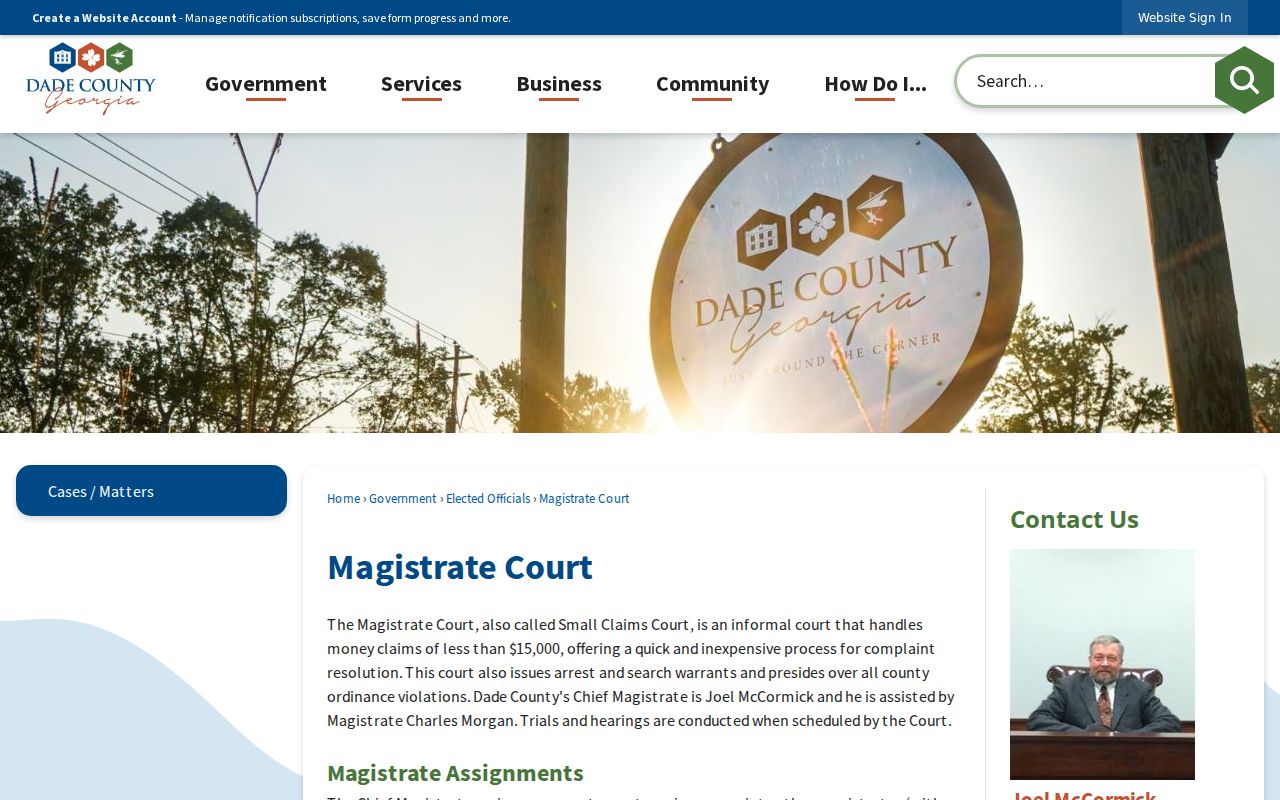
Confirm the correct office before travel because early Magistrate proceedings and the later Superior Court file remain distinct records.