
Sex Offender Checks in Dade County
The Georgia Sex Offender Registry, formally the Georgia Violent Sexual Offender Registry, is the main public search channel for Dade County. The Georgia Bureau of Investigation and its Georgia Crime Information Center maintain the statewide system under O.C.G.A. §42-1-12. Dade County Sheriff staff perform local registration and verification. Those roles fit together: the local office gathers and checks information, while the state portal publishes the fields Georgia law makes public.
Begin with the state portal for a name, county, city, ZIP code, or geographic search. Contact Dade Sheriff at 75 Case Avenue when the concern is a local registration detail, an address that may be stale, or suspected failure to comply. The sheriff also publishes a dedicated registry email, SOR@dadesheriff.com. For someone who may live or work beyond Georgia, add the U.S. Department of Justice search described below.
The official Georgia registry screen shows how the public search begins.
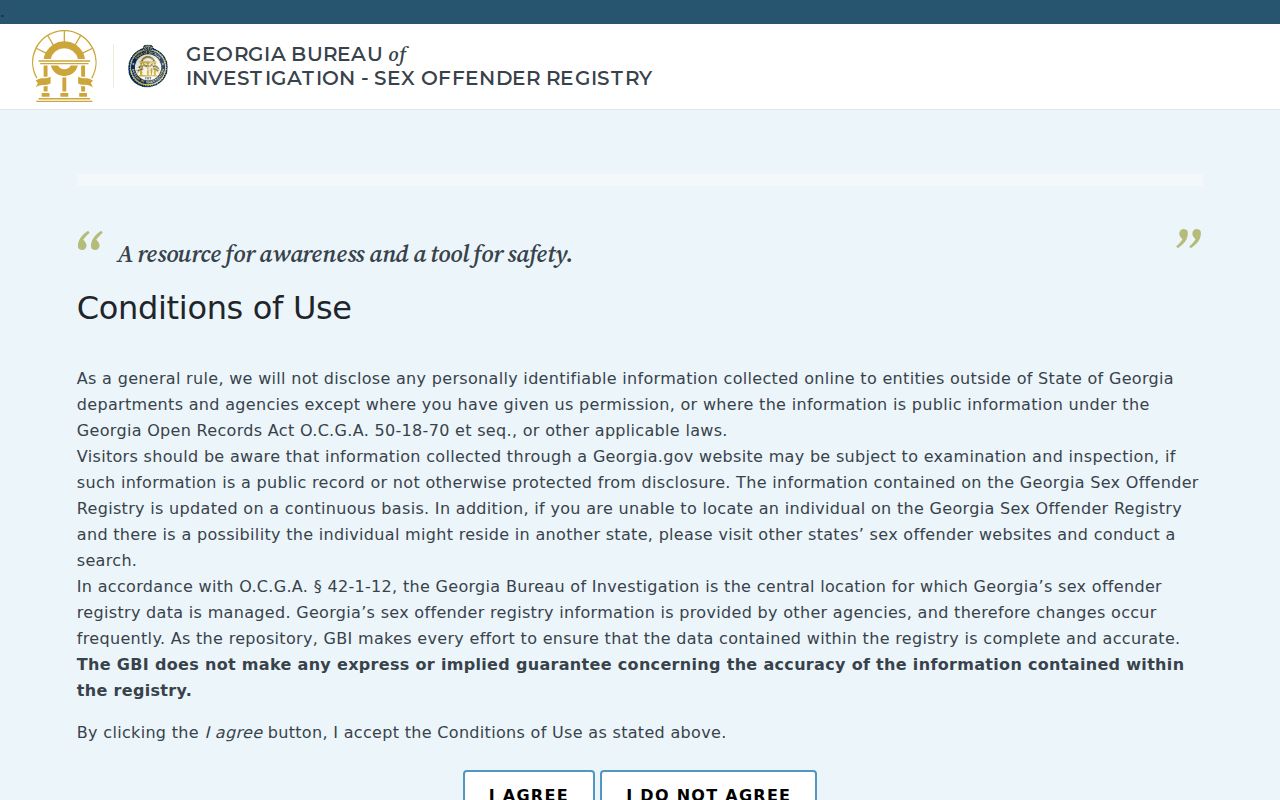
The screen is the statewide starting point, but Dade County Sheriff remains the local source for a compliance question.
Dade County Registry Contact
Dade County does not publish a separate local registry database in the reviewed material. Instead, the county jail and inmate resources page routes readers to the state registry, and the sheriff handles local registration work. A message about a possible error should identify the profile, the field in question, and why the information may be out of date. Do not confront the person shown in the profile.
Dade County Sheriff's Office
75 Case Avenue
Trenton, GA 30752
706-657-3233 or 706-657-2277
SOR@dadesheriff.com
The county's jail and registry resources page documents the local route to registry information.
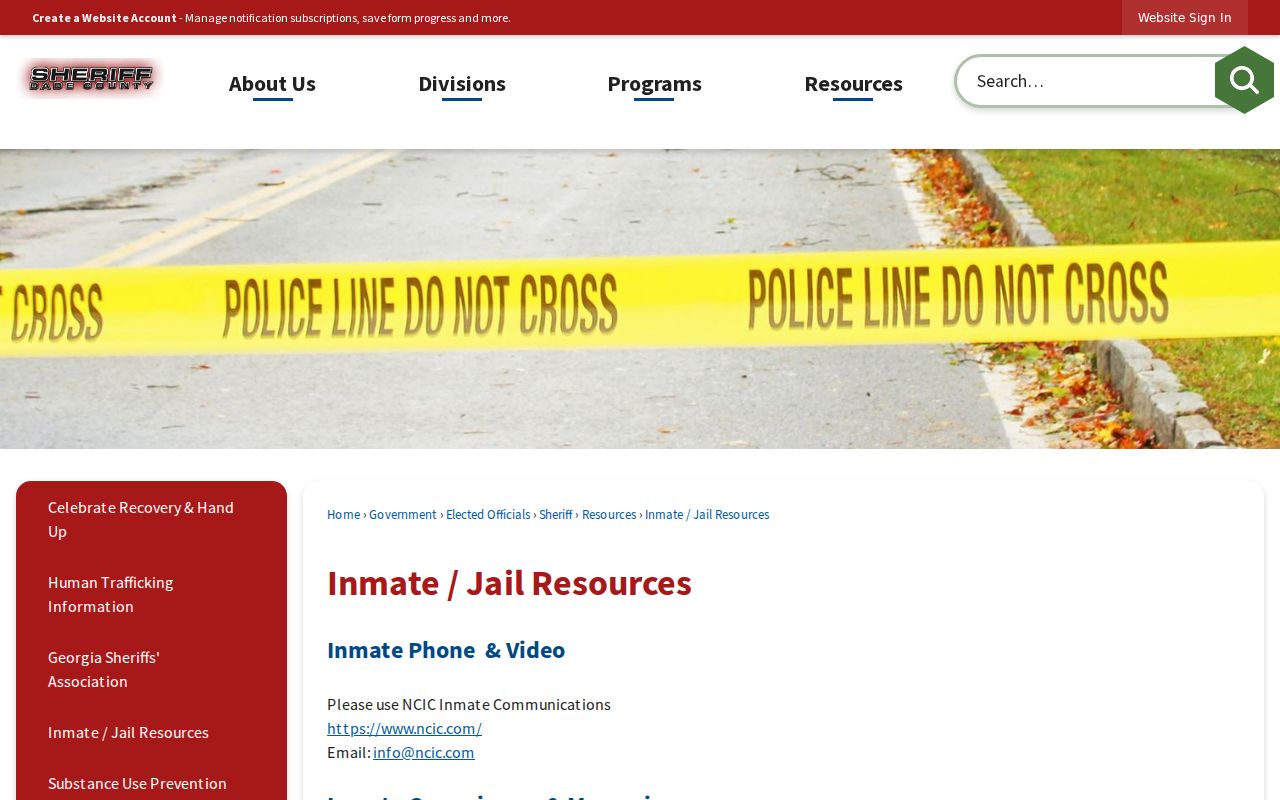
That official page links the local sheriff function to the GBI registry rather than presenting a second list.
How to Search the Georgia Violent Sexual Offender Registry
The portal supports more than a basic name query. Use the least broad field that fits what is known, then compare more than the name before treating a result as a match. The map and radius tools are useful for community awareness, while offense and status fields explain why a profile appears.
- Open the GBI public registry, read the conditions, and enter the security code.
- Choose a name search or use address, city, ZIP, county, or geographic fields for Dade County.
- Compare aliases, photograph, physical description, and location before selecting a profile.
- Open the record and review offense, registration, status, supervision, vehicle, and verification details.
| Search field | Type | Required | Use |
|---|---|---|---|
| Last and first name | Text | No | Supports partial-name searches |
| Offender type and gender | Select | No | Narrows the result set |
| Offense | Select | No | Filters by listed offense |
| Address, city, ZIP, county | Text/select | No | Use Dade County or Trenton for local results |
| Radius | Geographic | No | Searches within 1, 2, 3, or 5 miles |
Address type, absconder status, predator status, offense jurisdiction, and incarceration status add more filters. A security code and acceptance of the portal conditions are part of the search flow.
Dade County Border-Area Registry Searches
Dade County sits at Georgia's northwest edge, close to the Chattanooga region. A county-only query can miss a relevant registration in another state. The National Sex Offender Public Website searches participating jurisdiction registries through one federal interface. It is the better second step when a person, daily route, school route, or family activity crosses a state boundary.
NSOPW does not replace the GBI record. Open the source-jurisdiction profile when a national result appears, since that jurisdiction controls its terms, update schedule, and public fields. Then use the responsible state or local agency for a correction or compliance report.
The official national registry interface provides that cross-state layer.
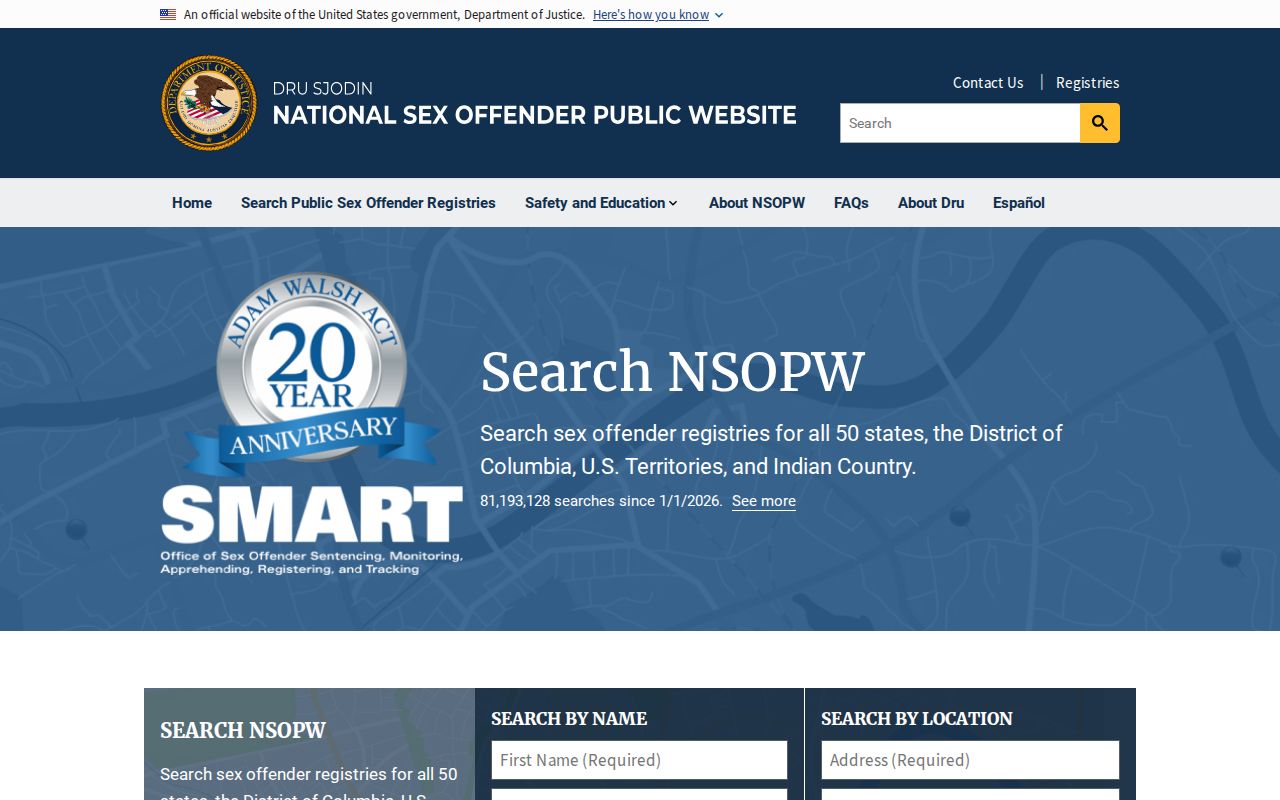
For a border-area search, the national screen broadens coverage while Georgia's profile remains the primary record for a Dade County registrant.
Inside a Registry Profile
A public Georgia profile combines identity, location, offense, and compliance information. Read each field as a status report, not as a complete criminal history. The listed offense explains the registration basis, but the underlying court file is the source for the full docket and disposition.
| Identity | Name, aliases, photograph, sex, race, birth year or date as displayed, height, weight, hair, eyes, marks, scars, and tattoos |
|---|---|
| Location | Primary, temporary, work, or school addresses when public, with map information |
| Offense | Offense description, conviction date, jurisdiction, court, victim age or gender when displayed, and sentence information |
| Registration | Registration date, last verification, status, predator classification, and absconder or incarceration flag |
| Other identifiers | State and FBI numbers, vehicles, employer or school, supervision agency, and supervising officer when public |
Some fields may be blank because they do not apply, are not public, or have not yet reached the portal. A photograph or address can change. Verify time-sensitive details with Dade County Sheriff.
Outdated Dade County Registry Addresses
An address that appears wrong calls for a report, not a personal visit. Save the profile URL or identifying details and note the specific inconsistency. Email SOR@dadesheriff.com or call the sheriff. If the issue concerns the state display itself, the local office can confirm whether an update has been reported through the criminal-justice network.
Registry absence also is not a general safety guarantee. The public list covers people subject to Georgia's registration law and information supplied by participating jurisdictions. It is not a list of every arrest, conviction, or risk. Personal safety decisions should use normal precautions and direct facts, not assumptions based only on a name search.
Georgia Registration Levels and Requirements
Georgia does not use a simple public Tier I, Tier II, and Tier III chart. The law distinguishes ordinary registrants, sexually dangerous predators, and certain absconded or incarcerated statuses. Most covered people register for life under O.C.G.A. §42-1-12, though a court petition for release may be possible after statutory conditions are met. The sheriff verifies local information, while the Georgia Sexual Offender Registration Review Board handles risk classification in applicable cases.
| Georgia category | Duration | Public meaning |
|---|---|---|
| Registered sexual offender | Generally life, subject to statutory relief | Core public registry category with sheriff verification duties |
| Sexually dangerous predator | Life | Risk classification with added monitoring and notification duties |
| Absconder or noncompliant status | Until resolved | Signals a reported compliance problem, not a separate offense tier |
Residence, work, and school limits can depend on the offense date and statutory grandfather rules. Confirm any specific restriction through the sheriff or qualified counsel instead of applying a generic distance rule to every profile.
How Dade County Updates Reach GBI
The local and state systems form one reporting chain. A person who must register reports to the sheriff under Georgia law. Dade County staff collect required details and perform local verification. Qualifying information then reaches GCIC, which maintains the public registry. Courts and corrections agencies provide other source facts tied to the conviction, custody, or supervision record.
Update flow: Registrant › Dade County Sheriff › GCIC › Georgia public registry.
A lag or mismatch can occur when a move, court event, or status change is still being processed. The proper response is to ask the office that owns that step. Dade County Sheriff handles the local report; GBI maintains the public state display; the convicting court holds the case record.
Dade County Registry Status Terms
Three labels often cause needless confusion. “Registered sexual offender” is the broad statutory status. “Sexually dangerous predator” is a separate risk classification made through Georgia's review process, not a synonym for every person on the registry. “Absconder” or “noncompliant” reports a compliance problem in the registry data. It does not create a universal ranking of all people shown. Georgia's categories should be read as Georgia defines them, not converted into a generic three-tier chart from another state.
- Verification
- The local process used to confirm required registration information with Dade County Sheriff.
- Absconder
- A status used when the responsible agency reports that a registrant's location or compliance cannot be confirmed.
- Predator classification
- A Georgia risk designation with legal duties beyond the ordinary registry category.
- Jurisdiction
- The state, court, or other authority tied to the qualifying offense.
Status terms also change where the next question goes. Dade County Sheriff can address local verification and suspected noncompliance. GBI controls the statewide display. A court clerk can supply the filed disposition behind an offense label. Separating those roles prevents a short public profile from being treated as the whole case file.
Dates deserve the same care. A last-verification date records a step in the registration process; it does not promise that every address detail was checked that day. A conviction date describes the case behind registration, while an initial registration date marks entry into the reporting system. When two dates appear to conflict, preserve the profile details and ask the responsible office which event each date represents. This is especially useful for an older out-of-state conviction later registered in Dade County, where the case date, Georgia registration date, and latest local verification can be years apart.
Community Notification and Lawful Use
The Georgia registry exists for public awareness and safety planning. It can help a family check an address, understand a nearby listing, or search across a planned route. Public access does not authorize threats, intimidation, vigilantism, property damage, or interference with lawful activity. A profile should be verified through the official source before anyone relies on it.
Misuse is prohibited: O.C.G.A. §42-1-12 warns that using registry information to harass or threaten a registrant or family member may be a crime.
Report suspected noncompliance to Dade County Sheriff and provide clear facts. Call emergency services only for an immediate threat. For a question about what a conviction record actually says, request the filed disposition from the court that entered it rather than drawing conclusions from a short registry label.